

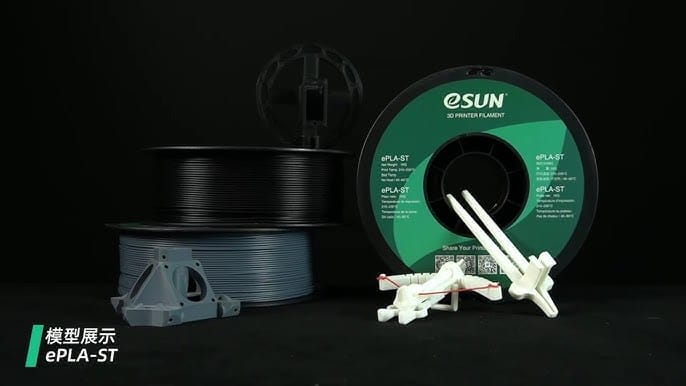
When choosing the right material for 3D printing, one of the most common questions is whether PLA filament is suitable for outdoor or general use in the UK. With our famously mild (and often damp) weather, it’s a fair concern—but in reality, PLA performs far better here than many people think.
Understanding the UK Climate
Looking at typical UK conditions, temperatures rarely reach extremes. Most of the year sits between roughly 5°C and 20°C, with only occasional summer spikes. Even during warmer periods, it’s uncommon to see prolonged temperatures above 30°C.
That matters because material performance is heavily tied to heat resistance—and this is where PLA gets unfairly criticised.
Why PLA Is Absolutely Fine in the UK
PLA (Polylactic Acid) has a glass transition temperature of around 55–60°C. This means it only starts to soften when exposed to temperatures well above anything you’d normally experience outdoors in the UK.
In practical terms:
- Your 3D prints will not deform in normal British weather
- They are perfectly suitable for air rifle accessories, mounts, grips, and general outdoor use
- Even in direct sunlight, most parts remain stable unless left in extreme conditions (like inside a hot car)
Where PLA can struggle:
- Inside vehicles on hot days (greenhouse effect can exceed 60°C)
- Near heat sources (radiators, engines, etc.)
For everyday UK use, however, PLA is reliable, stable, and more than fit for purpose.
PLA vs PETG – What’s the Difference?
While PLA is excellent, PETG is often mentioned as a more “durable” alternative. Here’s a clear breakdown:
PLA (Polylactic Acid)
Pros:
- Easy to print (ideal for consistent results)
- Excellent surface finish and detail
- Rigid and strong under normal conditions
- Lower cost
Cons:
- Lower heat resistance (~60°C)
- Can be brittle under heavy stress
PETG (Polyethylene Terephthalate Glycol)
Pros:
- Higher heat resistance (~80°C)
- More flexible and impact-resistant
- Better for high-stress or load-bearing parts
- More resistant to moisture
Cons:
- Slightly harder to print cleanly (stringing)
- Softer finish (less crisp detail than PLA)
- Can flex where rigidity is needed
Which Should You Choose?
For most UK-based users—especially those working on air rifle accessories or general-use 3D printed parts—PLA is often the best choice.
Choose PLA if:
- You want clean, precise prints
- The part won’t be exposed to extreme heat
- You need rigidity and good looks
Choose PETG if:
- The part will face higher stress or impact
- It may be exposed to higher temperatures
- You need extra durability over finish quality
Final Thoughts
There’s a common myth that PLA is “weak” or “unsuitable” for real-world use—but in the UK climate, that simply isn’t true. For the vast majority of applications, PLA is more than capable, highly reliable, and often the better choice.
Unless you’re pushing your prints into extreme environments, there’s no reason to avoid it.